

The previous story, “Data Part One,” asked if high speed private fiber optics lines (Dark Fiber) were being installed illegally in Oklahoma to connect multiple data centers. The layman’s answer is yes as profiteers place private lines in presumed public rights-of-way without compensation, notice to landowners, or surveys. Not to put too fine a point on it, but without surveys, then are no accurate installations.
The Oklahoma Attorney Generals (AG) office has been asked to review the matter, but according to the Oklahoma Corporation Commission (OCC), by law, they are not allowed to regulate data fiber. Only Oklahoma County Government is currently regulating installation and Wagoner County Commissioners, to their credit, have requested clarification from the AG office. There is no state oversight or consistent rule statewide.
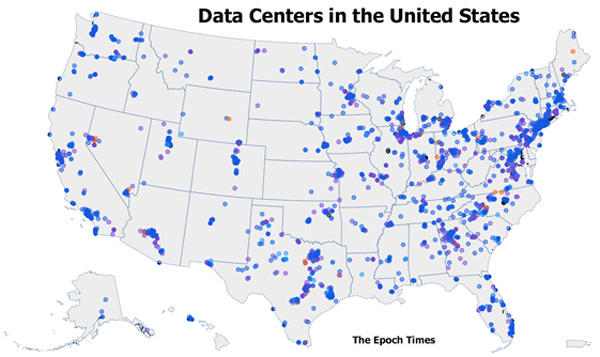
Complicating matters, local officials—encouraged by economic special interests, supported by regional planning organizations, and pursuing economic gains—are signing non-disclosure agreements (NDAs) to keep data center financial, construction, and operational details from the public.
Citizens object because publicly elected officials are sworn to represent citizens and many believe they betray constituents to sign such agreements. A law was proposed but defeated in the Oklahoma Legislature last year to specifically prohibit elected officials from signing such private NDAs. It should have been called the “Who’s your daddy law.”
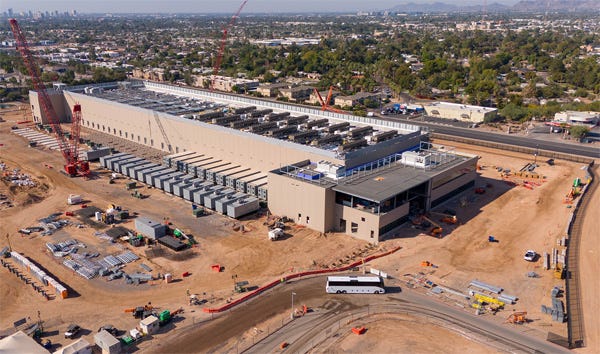
Both Wagner and Tulsa Counties utilize the planning and development services of the Indian Nations Council of Governments (INCOG). Tulsa County recently approved the Clydesdale Project, a large data center in north Tulsa County. Currently and for the last year, Stan Sallee has served as chair of INCOG. Sallee recently won reelection as Tulsa County Commissioner (District 1).
In an exclusive financial analysis provided to this writer, Joe Hart said, “Based on the project’s own nominal projections provided by the developers, Tulsa County would receive approximately $120.1 million in ad valorem property taxes over the life of the project if the land had been developed as residential. Under the proposed data center arrangement ultimately approved, the County would instead receive approximately $42.4 million in PILOT (payment in leu of tax) payments and $14.1 million in road payments, for a combined total of $56.5 million. This represents a reduction of approximately $63.6 million, meaning the County receives only about 47 cents on the dollar compared to normal property taxation. This means when the county’s bills go up the taxpayers of Tulsa County will see increased taxes.”
Hart is a business strategist with more than 15 years of experience building and managing businesses in the marketing, printing, and media industries. He holds an MBA from the University of Tulsa, dual bachelor’s degrees in marketing and business management from Oklahoma State University, and completed international business studies through the CIMBA program in Italy. A Guest Lecturer at the University of Tulsa, Joe combines academic expertise with real-world experience to help organizations improve operations.
Do these Private Dark Cable lines pose a health risk?
Theodora Scarato MSW, is a leading expert in environmental health policy related to cell towers, wireless and EMF in a detailed exclusive interview said fiber optics themselves do not emit power-line-like fields and she is unaware of studies showing EMF emission from fiber, though internet system changes may have user impacts.
However, Scarato identified three concerns from Data Centers and associated power infrastructure that greatly extend the area of concern for these developments throughout Northeastern Oklahoma.
Scarato has co-authored several scientific papers , including “U.S. policy on wireless technologies and public health protection: regulatory gaps and proposed reforms, published in Frontiers on Public Health, which details the history of cell tower and wireless network regulation in the US, the heavy industry influence and current deficiencies and loopholes, such as the lack of pre-market safety testing, oversight, and monitoring programs. Scarato is the Director of the Wireless and EMF Program for Environmental Health Sciences.
Scarato said there are risks from extremely low frequency magnetic fields from high-voltage transmission lines serving data centers; degraded power quality (harmonics and transients) traveling through the grid into homes; and added radiofrequency exposures when antennas are mounted on utility infrastructure. She underscores that communities far from data centers can be affected by new transmission corridors and infrastructure decisions.

High-Voltage Lines
New high-voltage lines often cross homes, schools, and farms—sometimes via eminent domain—raising exposure near residences and agricultural operations. Even areas not adjacent to data centers may experience heightened magnetic field levels and other EMF-related issues due to regional transmission upgrades intended to meet data centers’ substantial power demand.
Harmonics Travel
Scarato distinguishes between magnetic fields near transmission lines (hundreds of feet) and harmonics within the electrical system that can affect homes many miles away. Citing a Bloomberg sensor study across the U.S., she notes clusters of data centers correlate with degraded power quality throughout the local system, with elevated readings up to 20–50 miles, affecting appliance longevity, fire risk, and potentially individual health concerns due to a complex frequency mix emanating from wiring.
Measurement Challenges and Industry Limitations
Industry tools like total harmonic distortion metrics often miss higher-frequency components. While oscilloscopes and specialized sensors exist, there is no standardized, widely available method to capture the full harmonic spectrum, and data center operators acknowledge measurement gaps and ongoing efforts to develop better tools.
Health Impacts on Humans and Animals
Decades of research on non-ionizing EMF (especially magnetic fields from power lines) suggest associations with childhood leukemia (around 3–4 mG), miscarriages, male breast cancer, brain tumors, and increased dementia and Alzheimer’s mortality (including a multi-million person Swiss study). Animal studies report cellular effects, fertility issues, miscarriages, and reduced milk production in cattle, though findings are mixed, with funding biases noted between industry and independent research.
The Environmental Protection Agency (EPA) program to develop EMF health limits was defunded in the 1990s, leaving the U.S. without federal limits for these exposures. Industry-friendly panels and research funding skew outcomes toward “no effect,” complicating consensus and policy action.
Countries such as the Netherlands, Germany, Israel, and Denmark implement policies aiming to keep magnetic fields below about 4 milligauss due to leukemia associations, including buying homes under proposed lines, measurement requirements, and ALARA-style reductions. In contrast, industry cites ICNIRP/IEEE limits allowing thousands of milligauss (2,000–9,100 mG), far above health-associated thresholds.
Setback distances vary by line voltage; California specifies minimum distances (e.g., 100–350+ feet depending on kV rating) from the edge of right-of-way to school property, though 765 kV scenarios are newer and not fully addressed. Kv rating indicates the RPM (revolutions per minute) a motor will spin at full throttle when unloaded, given a specific input voltage.
How To Measure
Residents can use 3-axis Gauss meters (ranging from under $100 to several hundred dollars) to measure milligauss levels, moving the meter through space to capture variations. Utilities sometimes provide measurements (quality varies), and documenting procedures is advised. Elevated indoor readings without nearby lines often indicate in-home electrical issues fixable by electricians following code.
Gauss meters capture magnetic fields, but harmonics require specialized instruments. Public sensor networks (e.g., Bloomberg’s) used dedicated equipment; consumer-level harmonic measurement remains difficult, and standardized solutions are lacking.
Scarato critically notes the U.S. lacks federal limits, shifting responsibility to states for transparency and mitigation. In Oklahoma it is even more problematic as the Corporation Commission regulates ancient installations of copper but does not regulate today’s fiber optic.
More resources on Data Center health risks may be found at the following links:
Oklahoma Corporation Commission (OCC) Questioned
OCC Spokesman Jack Money, in response to this writer’s questions, detailed that the OCC is statutorily prohibited from regulating providers of high-speed internet access service or broadband service in accordance with 17 O.S. § 139.110. However, he acknowledges that companies - including regulated telecommunications service providers (TSPs) - are installing fiber which is used simultaneously for regulated and non-regulated services.
He said the Commission frequently encounters situations where non-regulated communications providers install fiber, but regulated TSPs install fiber to provide telecommunication service under OCC jurisdiction, and regulated TSPs install fiber to provide non-regulated communications services that are not under OCC jurisdiction.
In Oklahoma, Money said the Commission follows the Federal Communications Commission (FCC) allocation percentages when a company uses a fiber line to provide both regulated and non-regulated traffic. Additionally, the OCC typically does not get involved in the [building] of regulated telecommunications facilities.
Access to rights of way is generally controlled by local municipalities, county governments, and/or ODOT, depending on the situation.
Money said, “Our Public Utilities Division enforcement staff will work with fiber installers in a voluntary capacity if it observes a situation that is dangerous to the public.
“These entities often rely on the Commission’s granting of a Certificate of Convenience and Necessity (CCN) to determine how a company may access public rights of way, but that is not the intended purpose of a CCN,” Money added.
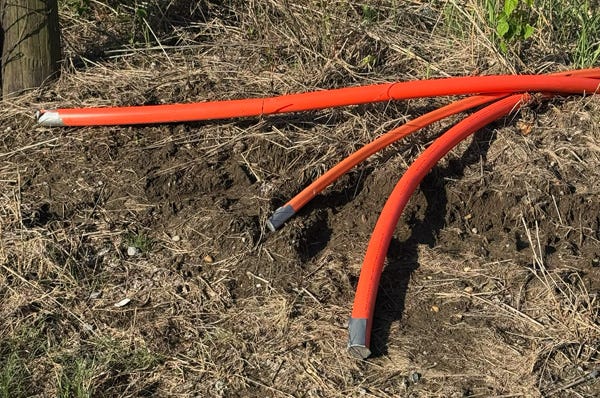
Wagoner County Update
As Data Part One detailed, citizens of Wagoner County have taken their concerns to the Wagoner County Board of County Commissioners. At a contentious Commissioners Special Meeting June 17 addressed complaints against Fidium, a telecommunications company, regarding the installation of fiber optic lines. The central conflict revolved around whether the lines serve a public or private purpose, the company’s legal right to use public easements, alleged property damage by contractors, and a perceived lack of transparency from the company.
Wagner County residents, led by spokesperson Phyllis Fallen, voiced strong opposition to a fiber optic installation project currently underway. They allege “Fidium” is deceptively burying two private data communication lines under the pretense of a single public utility line, with the ultimate goal of servicing future data centers, including a line traced to the “backyard of Google” in neighboring Mayes County. Residents reported significant negative impacts, including contractors tearing up a “massive amount of water lines,” causing uncertainty about water availability. They described rude and dismissive behavior from workers, who allegedly told one resident to “go back inside the house and shut up.”
Residents noted that contractors deviated from permits by crossing to the wrong side of the road, drove equipment into the middle of the road to avoid tree roots, and failed to properly survey or mark property lines before digging. This has resulted in filled-in ditches that now cause roads to flood. Alison Blair described the installation in front of her house as looking like it was done by a “drunken sailor” and expressed frustration over the perceived incompetence. Residents feel their property rights have been violated, particularly since they believe Fidium’s contractors resorted to using public right-of-ways only after failing to purchase private easements from farmers over the last eight to ten months. The consistent appearance of new orange flags suggests to them that work is about to resume despite a Wagoner County stop-work order and unresolved questions.
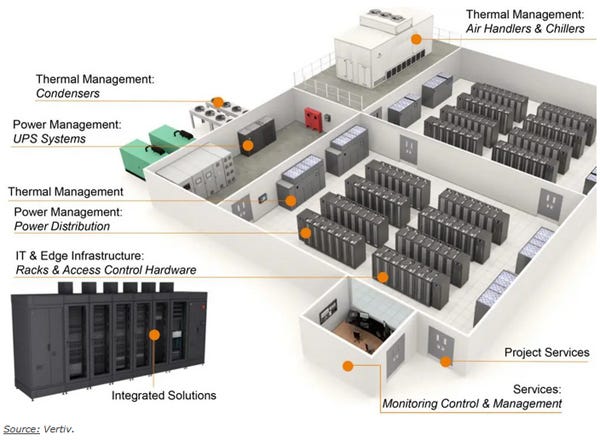
Fidium’s Mark Ramsey, legal counsel, and Jason Goodnight, an operations manager, explained that the line is part of a larger “backbone” infrastructure. While direct connection to this main line by individual homeowners is not feasible—analogous to tapping directly into a high-voltage electrical transmission line—the infrastructure ultimately serves the public by feeding into substations and distribution networks. They clarified that Fidium is the owner of the lines and intends to own them “forever,” although Ramsey conceded that a future sale of the company or its assets is always a possibility.
The core of the debate was centered on whether the fiber optic lines constitute a “public use,” which would permit their installation in public easements, or “private use.” Residents, supported by industry professional Wes Scott, argued that if the public cannot connect to all the lines in the ditch, the project is not for public benefit. They contend that at least two of the lines are private, dedicated to large corporate clients like data centers (e.g., Google, Meta), and that Fidium deceptively bundled them with one public line to circumvent landowner rights and avoid purchasing private easements. Resident Chuck Walker, a retired PSO employee, noted that the potential ad valorem tax revenue for the county could be a “huge windfall,” but this benefit is undermined if the lines are for private interests that aren’t properly reported or taxed.
The meeting concluded without a definitive resolution, as the board decided to maintain the current stop-work order and await a formal legal opinion on the matter from the Oklahoma Attorney General. A commissioner received a text during the meeting informing him that the AG’s office was actively working on an opinion related to this specific issue.
Both the county’s legal counsel and Fidium’s attorney acknowledged the complexity of the legal questions surrounding public vs. private use in easements. The county counsel advised that it would be “imprudent to proceed without knowing,” noting that while an AG opinion is not strictly binding on the county, it carries significant persuasive weight and would be crucial guidance.
Phyllis Fallen has appeared twice on the YouTube channel “Straight Up Dave” with this writer as host. You may view the most recent interview below.
This story will continue as events unfold, but at this time, Oklahomans wonder, “How many issues must arise before elected officials stop all Data Center development statewide and answer questions – in detail, with transparency and accountability? Or should Oklahomans wait until they hear coins dropping quietly in official pockets?”
Monday, July 13, at the Wagoner County Commission meeting, it became clear that Commissioners have been pressured by threats of litigation by Fidium according to Phyllis Fallen and a half dozen concerned constituent property owners. The Commissioners are showing signs of frustration and declared that citizen rights were not limited. They could file a class action lawsuit against the company and avoid County involvement. Yes, and citizens could also hire other public officials with a bit more brass to represent them and diligently uphold sworn oaths.
It is important to know that some of these commissioners are involved in various Data Center development efforts, but details are limited, as noted above, by NDAs. Further, the local District Attorneys in every Oklahoma county are overworked, underpaid, and likely unfamiliar with the technical issues involved.
Fallen didn’t want to fight with her elected local officials no matter how disappointing their cowardness on the topic might be.
Fallen declared, “We believe that if we could find a law firm that would file a case, we can gather thousands of citizen property owners as plaintiffs throughout the State of Oklahoma.”
Anyone know a technology competent attorney with brass and brains?
If so, reply to editor@tulsatoday.com and we will forward contact information to the appropriate parties concerned on this topic.
Regardless, this media group will continue to cover this critical public topic.
About the author: David Arnett’s beginning in print journalism was not planned in 1985 but covered by the Columbia Journalism Review in 1987. After 11 years in print, he established TulsaToday online in 1996 and Straight Up on Substack in 2022 providing email subscriptions. In April 2026, he began the YouTube Channel, Straight Up Dave. Arnett is identified nationally as a “Veteran Oklahoma Political Journalist” and locally as an “Equal Opportunity Aggravator.”
Thank you for reading. Your comments are welcome below and/or by email.
Have you noticed that nobody has ever cared about or even noticed the data center at Tulsa International Airport? Maybe we should consider having all the data centers built at airports......or have all the airports have data centers.
Thank you for covering this important issue.